
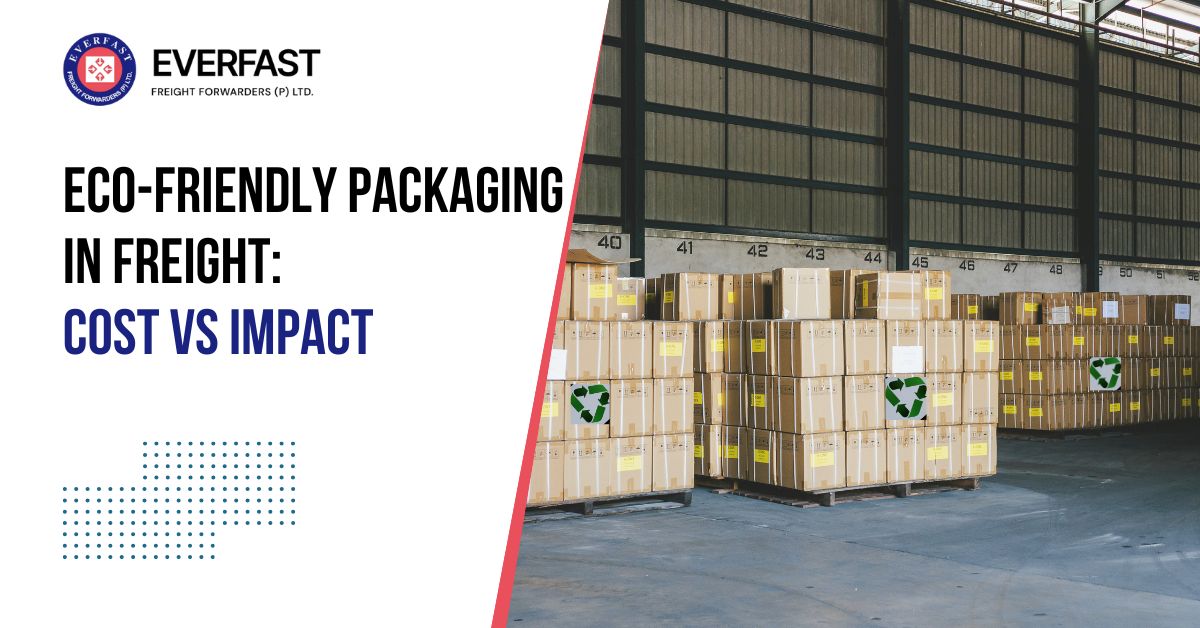
Eco-Friendly Packaging in Freight: Cost vs Impact
As sustainability becomes a central business priority, the freight and logistics industry is facing tough questions — and one of the biggest is packaging.
For decades, freight packaging has relied heavily on plastics, foams, and synthetic wraps — all efficient and cheap, but environmentally damaging. Today, with rising regulatory pressure and growing customer awareness, eco-friendly packaging is becoming more than a buzzword. It’s a business choice that freight companies can no longer ignore.
But the real question remains: Does it make financial sense?
Why Packaging Needs a Rethink
Freight operations involve huge volumes of packaging — from stretch film and tape to pallets and fillers. Most of these materials end up in landfills or worse, polluting water bodies. In India alone, plastic packaging waste is climbing rapidly, and logistics contributes a fair share.
New regulations like the Plastic Waste Management Rules and global climate targets are pushing businesses to clean up their supply chains. Beyond compliance, customers and B2B partners now expect greener alternatives — and they’re rewarding companies that deliver.
What Counts as Eco-Friendly Packaging?
- Eco-friendly packaging goes beyond using a brown box. It includes:
- Recyclable or biodegradable materials
- Compostable wraps and void fillers
- Reusable crates or containers
- Water-activated paper tape over plastic
- Corrugated boxes made with recycled content
These solutions reduce waste, carbon footprint, and even total shipping weight — a key cost factor in freight.
Is It More Expensive?
Yes — at least initially.
Compostable wraps and biodegradable fillers cost more than plastic-based options. Paper tape can cost nearly twice as much as PVC tape. But that’s just one part of the story.
Eco-packaging often leads to:
Lighter shipments, which reduce fuel and freight costs
Reusable materials that lower long-term spend
Optimised packing design, cutting down volume charges
Reduced damage claims due to better cushioning systems
In other words, the upfront price is balanced — and sometimes outweighed — by long-term savings and operational efficiency.
Real Impact, Beyond Just Greenwashing
Eco-packaging also brings business benefits that go beyond the environment:
- Improved brand perception — Clients notice and value green choices
- Better supplier relationships — Especially with global players who prioritise ESG
- Waste reduction — Easier disposal and recycling across the supply chain
- Compliance readiness — Staying ahead of evolving packaging laws
Big players like DHL and Amazon have already moved to paper-based, plastic-free alternatives in India. Startups and mid-sized freight companies are following suit — with smart pilots on reusable containers and recyclable pallets.
Where to Start
If you’re considering a shift, begin with an internal audit. Identify which materials are used most, and which create the most waste. Replace plastic tapes, fillers, and over-packaging with greener options in phases. Work with vendors who understand freight needs and offer scalable solutions. Most importantly, train teams — eco-packaging only works when used right.
Final Word
Eco-friendly packaging may come with a price tag, but the cost of not acting is far higher — in lost contracts, damaged reputation, and regulatory penalties. More importantly, it’s a chance for freight companies to lead with purpose.