
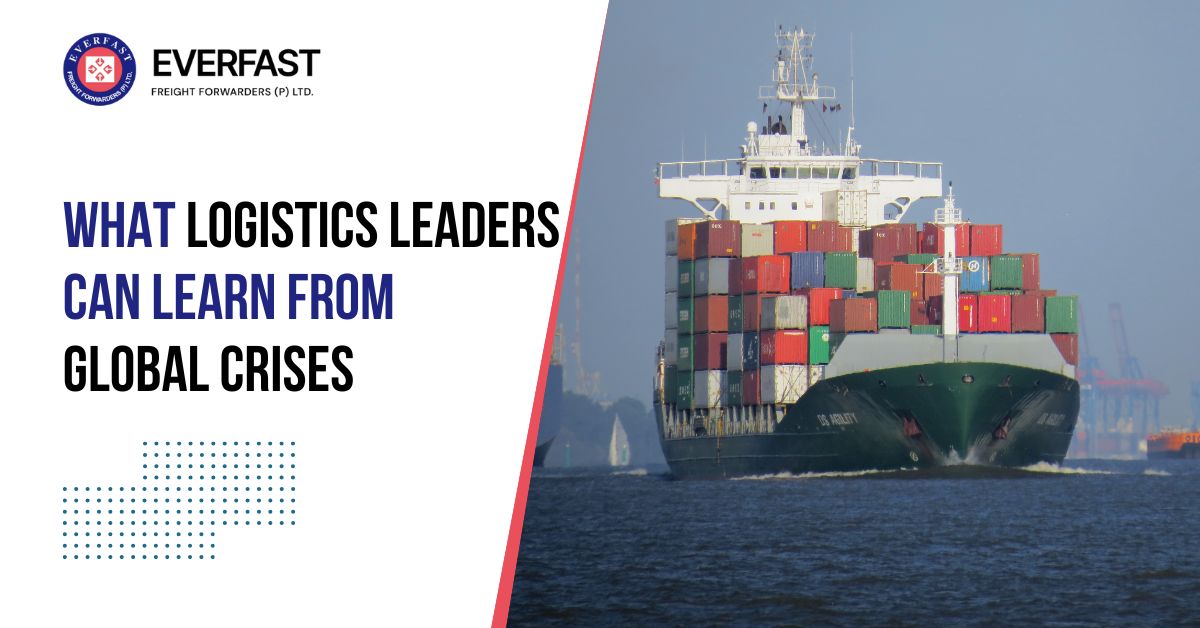
What Logistics Leaders Can Learn from Global Crises
The logistics industry has always been shaped by disruption. Wars, pandemics, trade disputes, and natural disasters have all left lasting imprints on how goods move across borders. For logistics leaders, these moments of upheaval are not just challenges to overcome—they are opportunities to rethink and transform. Every crisis teaches lessons that can redefine how supply chains are designed, managed, and secured for the future.
In today’s interconnected world, the impact of a crisis is rarely contained within one country. A factory closure in Asia can stall production lines in Europe. A geopolitical conflict can reroute shipping lanes overnight. A natural disaster can delay deliveries for weeks. Understanding how to prepare for these ripple effects has become one of the defining responsibilities of logistics leadership.
1. Resilience Matters More than Efficiency
For years, supply chains were optimized for lean operations—minimizing inventory, reducing costs, and moving goods just in time. This worked well in stable times but fell apart during the COVID-19 pandemic, when bottlenecks and factory closures brought global trade to a standstill.
Lesson: Efficiency alone is fragile. Building resilience—through multiple suppliers, diversified routes, and strategic stockpiles—is what keeps supply chains moving when disruptions hit. The companies that bounced back fastest weren’t the leanest, but the most adaptable.
2. Technology Is a Crisis Multiplier
Crises highlight the divide between digitally prepared companies and those relying on outdated systems. During the pandemic, businesses equipped with real-time tracking, AI-powered forecasting, and cloud-based collaboration managed to stay agile. Blockchain is also emerging as a way to maintain trust and transparency when global trade faces uncertainty.
Lesson: Technology is more than an efficiency booster—it’s a survival tool. Investments in digital supply chain twins, predictive analytics, and IoT-enabled monitoring can give leaders the visibility and agility needed to respond in real time.
3. Diversification Is Non-Negotiable
Events like the U.S.–China trade tensions, the Russia–Ukraine conflict, and the 2021 Suez Canal blockage proved how fragile overreliance on single suppliers or routes can be. Billions of dollars’ worth of goods were delayed simply because one chokepoint failed.
Lesson: Diversification is essential. Whether it’s spreading suppliers across regions, balancing between sea, air, and rail, or working with multiple logistics partners, diversification reduces dependency and builds long-term trust with customers.
4. Sustainability Is Risk Management
Climate change is no longer just an environmental issue—it’s a direct logistics risk. Rising sea levels threaten ports, extreme weather disrupts transport, and stricter carbon regulations are reshaping trade economics. Companies with greener and more localized supply chains are already proving to be more resilient in climate-related disruptions.
Lesson: Sustainability is about more than reputation. It’s about risk management. Electric fleets, eco-friendly packaging, and optimized routing help reduce both carbon emissions and vulnerability to climate shocks.
5. People Are at the Core of Crisis Response
Every disruption reminds us that logistics is powered by people as much as by machines. During COVID-19, frontline workers—drivers, warehouse staff, seafarers—kept the world moving under extraordinary pressure. Behind the scenes, skilled managers made quick decisions that determined whether operations stalled or survived.
Lesson: Investing in people is non-negotiable. Training, well-being, and empowerment foster a culture of adaptability. When a crisis hits, a capable and motivated workforce can make all the difference.
6. Scenario Planning Must Become Routine
Too many organizations plan for growth but not disruption. Crises like the 2008 financial meltdown or the pandemic showed the value of “what if” thinking. Companies that practiced scenario planning—simulating cyberattacks, port shutdowns, or sudden tariff hikes—were far better prepared to adapt quickly.
Lesson: Scenario planning should be a regular exercise, not a reaction after the fact. Preparedness today means fewer surprises tomorrow.
Final Thought
Global crises will keep coming. The real question is not if but when. Logistics leaders who embrace resilience, technology, sustainability, and people-first strategies will not only weather the storm but come out stronger. The best supply chains of the future will not merely survive crises—they will be designed to thrive because of them.