
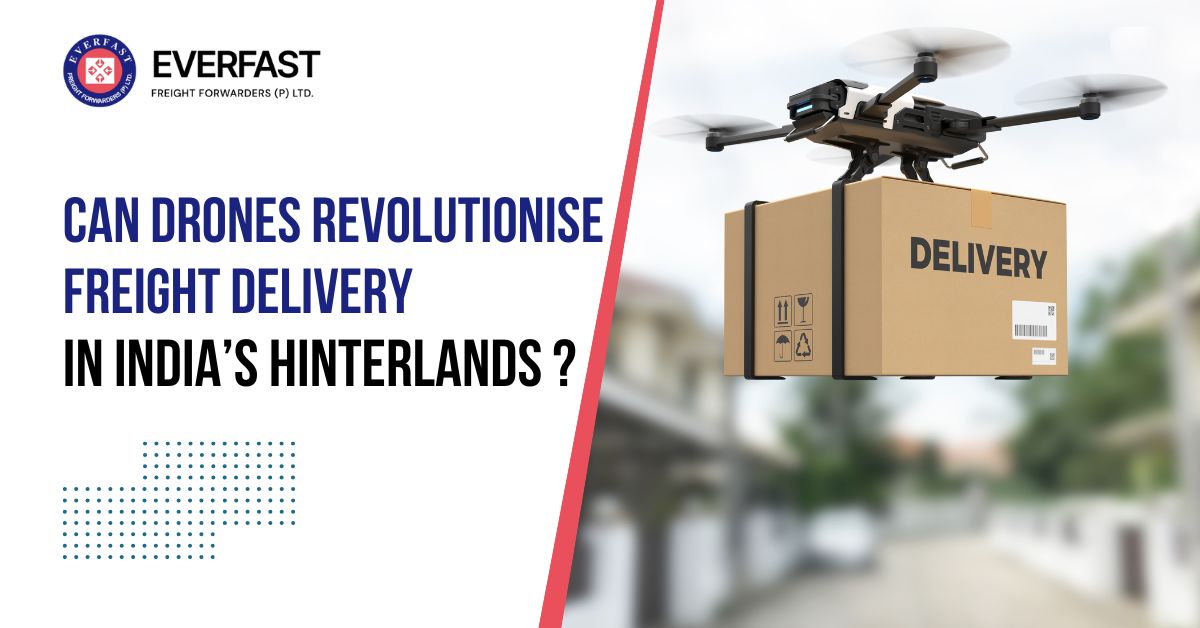
Can Drones Revolutionise Freight Delivery in India's Hinterlands?
In India, freight often hits a roadblock when it comes to the last mile. Cities and industrial hubs may have smooth highways and modern logistics parks, but rural India tells a very different story. Poor road networks, seasonal floods, hilly terrains, and sheer remoteness make it tough to move goods quickly and cost-effectively. This is where drones are beginning to take off—not just as a futuristic idea, but as a practical tool to bridge the gap.
Why Drones Could Work for Rural India
India has more than 600,000 villages, many far from reliable transport. Trucks and vans often take hours, if not days, to cover distances that a drone can fly in under an hour. That speed isn’t just convenient; in some cases, it can be life-saving.
- · Faster movement: Drones can cover 50–100 km quickly, avoiding bad roads or blocked routes.
- · Reaching the unreachable: Hills, rivers, and narrow rural lanes pose no problem for aerial delivery.
- · Lower costs over time: Once scaled, drones could reduce per-parcel delivery costs in remote regions.
- · Eco-friendly: Battery-powered drones leave a much lighter carbon footprint than diesel trucks.
For rural India, where logistics inefficiencies often mean higher costs and delays, drones offer a promising alternative.
The Early Experiments
This shift isn’t just theoretical—India has already seen drones at work in logistics.
- Ø Healthcare first: Drones have delivered vaccines, medicines, and even blood units in states like Telangana, Meghalaya, and Arunachal Pradesh. These missions proved that speed and reliability can make a life-or-death difference.
- Ø E-commerce trials: Retailers are piloting drones for small packages in semi-urban and rural belts, hoping to reach customers faster.
- Ø Agriculture links: Drones are being tested for moving seeds, fertilizers, and perishables between farms and local hubs.
These examples show how drones can cut through the inefficiencies of rural supply chains.
But Challenges Remain
Of course, the road—or sky—ahead isn’t without bumps.
- Rules and regulations: Flying drones over villages or across long distances requires multiple clearances and strict safety checks.
- Limited payloads: Most delivery drones today carry only 2–20 kg, which works for medicines or e-commerce but not for bulk freight.
- Infrastructure needs: Drone hubs, charging stations, and maintenance networks will need investment before large-scale adoption.
- Community trust: Villagers must feel comfortable with drones buzzing overhead; building acceptance is as crucial as the tech itself.
Looking Ahead
The most realistic future may be a hybrid model. Trucks and trains will continue to carry goods across long distances, while drones handle the trickiest last 20–30 km. AI-driven route planning, better batteries, and automated fleets are already improving feasibility.
Partnerships will also play a big role—between logistics firms, governments, and drone startups. If these pieces come together, India could build a cost-effective drone delivery ecosystem that serves both business interests and rural communities.
Final Word
Drones won’t replace traditional freight anytime soon. But they can solve one of the toughest puzzles in Indian logistics: reaching the last mile in rural and remote areas quickly, affordably, and sustainably.
For villages, it means faster access to essentials—from life-saving medicines to online shopping orders. For companies, it opens up new markets and sharper efficiency. The question now isn’t if drones will reshape India’s freight story, but how soon they’ll become part of everyday logistics.