
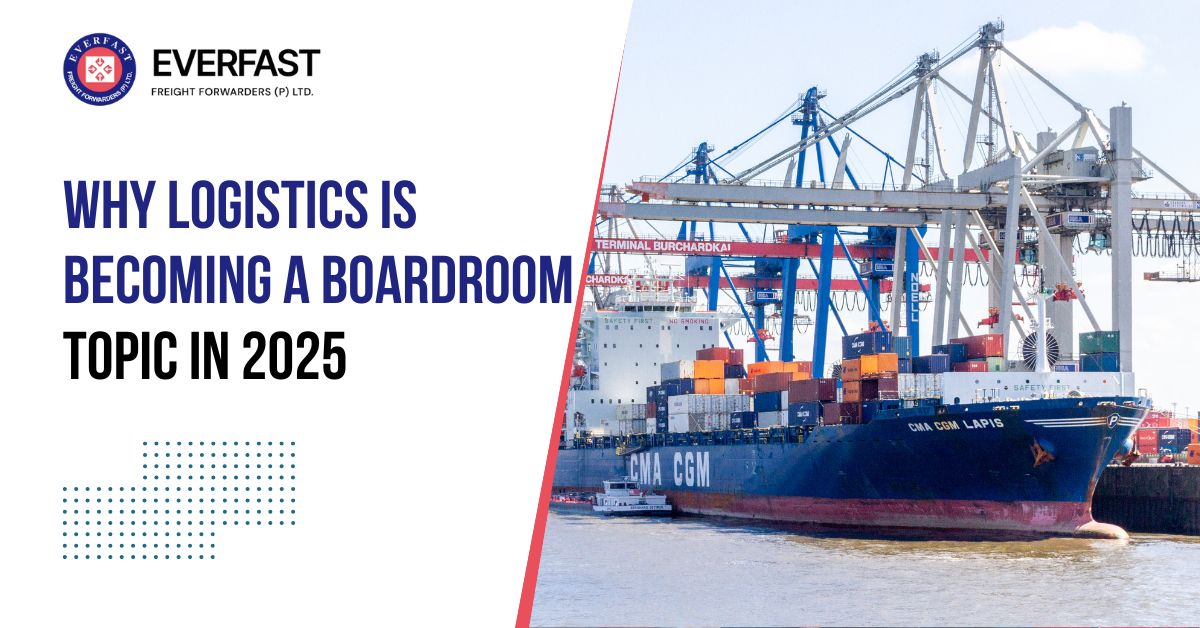
Why Logistics Is Becoming a Boardroom Topic in 2025
For years, logistics in India was treated as a support function—important, but rarely central to business strategy. That perception has shifted. In 2025, logistics is no longer just about moving goods from one point to another; it has become a driver of competitiveness, resilience, and customer trust. Today, it commands a place at the boardroom table.
From Cost Burden to Growth Enabler
Indian companies once viewed logistics mainly as a cost to be trimmed. But with logistics expenses still close to 14% of GDP, compared to 8–10% in advanced economies, efficiency is now a strategic lever. Better freight planning not only reduces costs but also helps businesses reach new markets faster. For consumer brands, logistics is increasingly the difference between winning and losing customers.
The Gati Shakti Advantage
The government’s PM Gati Shakti Master Plan is reshaping how companies think about logistics. By integrating road, rail, ports, and digital systems, it is unlocking faster connectivity and multimodal options. For boards, this changes questions like where to set up factories, how to serve Tier-2 and Tier-3 cities, and how to cut lead times for exports. Logistics planning is now a core part of growth discussions.
Resilience Over Efficiency
The pandemic and subsequent disruptions—from the Red Sea crisis to semiconductor shortages—taught companies that fragile supply chains can wipe out quarterly results. In India, boards are now prioritising resilience alongside efficiency. Building regional hubs, diversifying suppliers, and using predictive technologies are no longer just operational fixes but strategic decisions with CEO oversight.
Customers Won’t Wait
The Indian consumer has been transformed by the likes of Blinkit, Amazon, and Flipkart. Same-day or next-day delivery, transparent tracking, and easy returns are now standard expectations. In B2B markets too, manufacturers and distributors demand similar service reliability. Boards recognise that logistics is customer experience, and delays quickly show up as brand damage.
Green Pressure Is Rising
Logistics is a major contributor to India’s carbon footprint, and sustainability has become a board-level issue. Investors, regulators, and customers are asking tough questions: How soon can we shift to electric fleets? Can greener packaging scale without raising costs? What role will hydrogen or biofuels play? With ESG scores influencing valuations, sustainable logistics is no longer optional.
Digital Tools Are Changing the Game
Indian logistics is undergoing rapid digitisation. IoT-enabled tracking, AI-powered route optimisation, and digital freight exchanges are giving businesses visibility and control. For boards, the conversation has moved from “Should we invest in technology?” to “How fast can we scale it?”. Technology adoption is now tied directly to competitiveness and resilience.
Logistics as a Brand Differentiator
In 2025, logistics has become part of the brand promise. Whether it’s a consumer goods company reaching rural customers faster or an exporter assuring global buyers of reliability, logistics now influences reputation. For boards, it is no longer a background cost—it is a frontline differentiator.
Final Word
Logistics in India has moved out of warehouses and into boardrooms. It now shapes decisions on growth, resilience, sustainability, and customer loyalty. Companies that treat logistics as a strategic priority, not just an operational necessity, will be the ones that thrive in the years ahead.
For leaders, the key question is no longer “How much does logistics cost?” but “How much value can it unlock?”