
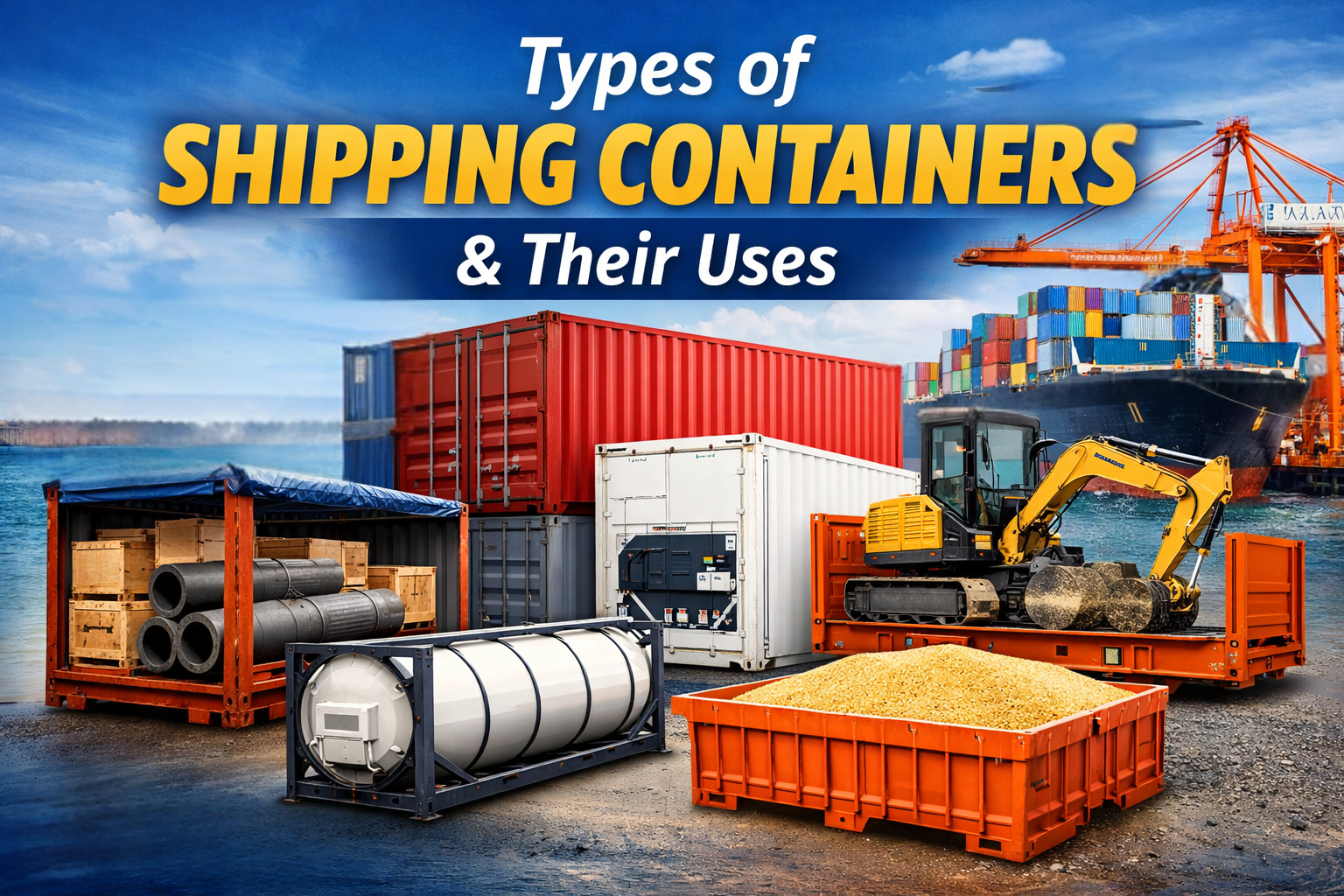
Types of Containers Used in Shipping and Their Uses
Types of Containers Used in Shipping and Their Uses
In today’s global trade environment, efficient transportation of goods depends heavily on the right choice of shipping containers. Containers protect cargo, reduce transportation costs, and streamline handling across different modes of transport — sea, rail, and road. At Everfast Freight Forwarders Pvt Ltd, we help businesses choose the most suitable container type based on cargo characteristics, destination, and logistics needs.
Let’s explore the most common types of containers used in shipping and how they are best utilized.
1. Standard Dry Containers
Also known as General Purpose (GP) Containers, these are the most widely used containers in global shipping.
Key Features:
- Fully enclosed, weather-proof
- Available in 20ft and 40ft sizes
Best For:
- Dry, non-perishable goods like electronics, furniture, garments, machinery, and packaged foods.
Why Use Them?
Standard dry containers are cost-effective, easy to handle, and capable of carrying a wide range of products safely over long distances.
2. High Cube Containers
High Cube containers offer additional height compared to standard containers.
Key Features:
- One foot taller than standard containers
- Same length options (40ft)
Best For:
- Lightweight, bulky cargo such as automotive parts, plastics, wood products, and large equipment.
Why Use Them?
The extra volume allows more space for cargo without increasing footprint — ideal when maximizing payload efficiency is a priority.
3. Refrigerated Containers (Reefers)
Temperature-controlled containers, commonly called reefers, are essential for perishable goods.
Key Features:
- Built-in refrigeration units
- Precise temperature control (typically -30°C to +30°C)
Best For:
- Fresh produce, dairy, meat, seafood, pharmaceuticals, and temperature-sensitive products.
Why Use Them?
Reefers maintain consistent temperatures and humidity levels throughout transit, ensuring cargo quality and safety from origin to destination.
4. Open Top Containers
Open top containers feature a removable tarpaulin roof instead of a solid top.
Key Features:
- Top access for loading/unloading
- Ideal for over-height goods
Best For:
- Heavy machinery, timber, construction materials, and oversized cargo that can’t fit through standard doors.
Why Use Them?
They allow cargo to be loaded from the top by crane or other equipment — perfect for irregularly shaped loads.
5. Flat Rack Containers
Designed with collapsible sides or no sides at all.
Key Features:
- Strong base platform
- Ends can be fixed or collapsible
Best For:
- Vehicles, machinery, industrial equipment, and other oversized cargo.
Why Use Them?
Their open design accommodates wide, tall, or heavy items that wouldn’t fit inside a conventional container.
6. Tank Containers
Also known as ISO tanks, these are specialized containers for liquids, gases, and hazardous chemicals.
Key Features:
- Stainless steel inner tank
- Protective outer frame
Best For:
- Chemicals, oils, food-grade liquids, and bulk liquids.
Why Use Them?
Tank containers are engineered for safety, leak prevention, and efficient bulk transport — with strict compliance for hazardous materials.
7. Bulk Containers
These containers are designed with hopper bottoms for easy unloading of loose bulk products.
Key Features:
- Side or top openings
- Gravity-based discharge
Best For:
- Grains, fertilizers, minerals, and other bulk materials.
Why Use Them?
Bulk containers save handling time and labor costs by allowing cargo to be discharged quickly and cleanly.
Choosing the Right Shipping Container
Selecting the right container isn’t just about size — it’s about protecting your cargo, optimizing transportation costs, and ensuring smooth logistics operations. Factors like product type, destination climate, handling limitations, and delivery timelines all play a role.
At Everfast Freight, our team of logistics experts helps you assess your shipment requirements and choose the best container solution for your business needs.