
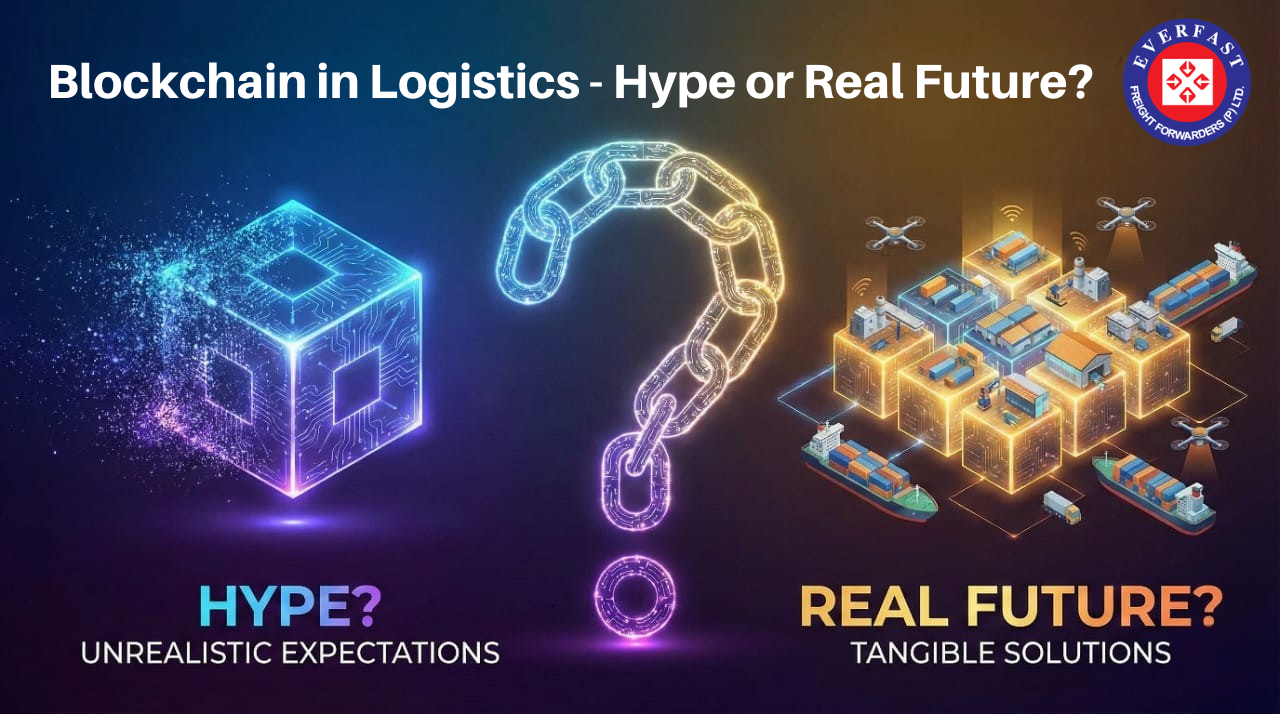
Blockchain in Logistics - Hype or Real Future?
First Things First: What Is Blockchain?
In simple terms, blockchain is a shared digital ledger where information is stored securely and cannot be altered once it is recorded. Unlike traditional systems where data is controlled by a single company, blockchain distributes information across multiple parties. Everyone involved sees the same verified version of the data.
For the logistics industry, this means fewer errors and more clarity. There are no duplicate or mismatched documents, no confusion about who edited what, and no hidden changes. Instead, there is one reliable source of truth that all stakeholders can trust.
Why Logistics Needs Blockchain
Logistics is a complex ecosystem involving multiple players such as shippers, freight forwarders, transporters, ports, customs authorities, warehouses, and end customers. Every shipment generates large volumes of data and documentation.
When this information is scattered across emails, PDFs, and disconnected systems, delays and disputes are almost unavoidable. Blockchain addresses these challenges by bringing transparency, security, and efficiency into a single shared system.
1. Better Shipment Visibility
Blockchain enables every stage of a shipment from origin to final delivery to be recorded on a shared platform. This creates a clear and traceable shipment journey.
Key benefits include:
- Real-time shipment tracking
- A complete and transparent shipment history
- Easier audits and regulatory compliance
Since all parties access the same data, confusion is reduced and delays caused by missing or incorrect information are minimized.
2. Stronger Security and Reduced Fraud
Document fraud remains a major issue in logistics, particularly with invoices, bills of lading, and delivery confirmations. Blockchain records are immutable, meaning once data is added, it cannot be edited or deleted.
This helps to:
- Prevent document tampering
- Reduce disputes between stakeholders
- Build stronger trust across the supply chain
For high-value or sensitive cargo, this level of security is a significant advantage.
3. Faster Payments Through Smart Contracts
Blockchain supports smart contracts—automated agreements that execute actions once predefined conditions are met.
For example:
- Payments are released automatically upon delivery confirmation
- Penalties are applied if delivery timelines are missed
- Customs clearance steps are triggered instantly
This automation reduces manual follow-ups, speeds up settlements, and improves cash flow across the logistics chain.
4. Lower Operational Costs
A large portion of logistics costs comes from manual paperwork, repeated data entry, and delays caused by verification processes. Blockchain reduces these inefficiencies by keeping records digital, verified, and easily accessible.
The result is lower administrative costs, faster operations, and better use of resources.
Why Isn’t Blockchain Widely Adopted Yet?
Despite its advantages, blockchain adoption in logistics faces several challenges. The technology delivers maximum value only when multiple stakeholders adopt it together. If even one major participant remains offline, the overall impact is reduced.
Additionally, many logistics companies still depend on legacy systems. Integrating blockchain requires investment, technical expertise, and long-term planning. Regulatory differences across countries also play a role, as legal acceptance of blockchain-based documents is still evolving.
Real-World Applications Today
Even with these challenges, blockchain is already making its mark in logistics:
- Global retailers use it to track product origins and improve transparency
- Shipping lines test blockchain-based documentation systems
- Ports and customs authorities experiment with paperless trade solutions
The Real Future of Blockchain in Logistics
Blockchain is unlikely to replace existing logistics systems overnight. Instead, it will gradually integrate into them, becoming a foundational layer for trust and automation.
In the coming years, we can expect:
- Digital documents replacing physical paperwork
- Faster settlements with fewer disputes
- Greater trust between global trade partners
- Smarter, more automated supply chains
At EverFast Freight, we closely monitor technologies that improve reliability, speed, and transparency, because the future of logistics depends on smarter systems—not just faster transport.
Final Verdict
Blockchain in logistics is not hype but it’s not magic either. It is a powerful tool that, when implemented correctly, can improve visibility, increase trust, reduce delays, and lower operational costs.
Companies that begin preparing today will be better positioned when blockchain becomes a standard across global trade.