
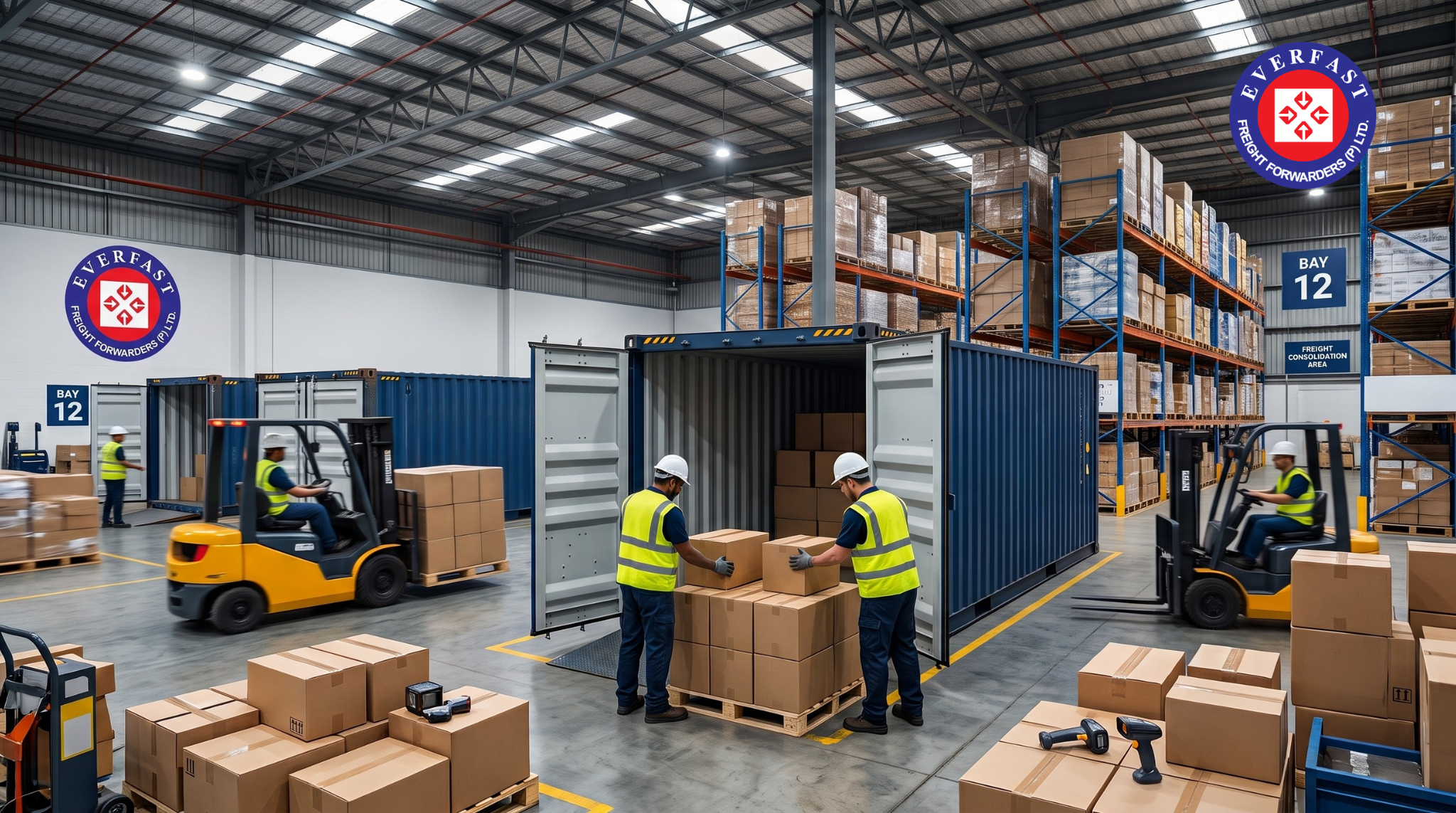
What Is Freight Consolidation? How LCL Shipping Cuts Costs for Small and Mid-Size Exporters
The Problem Small Exporters Face
Not every shipment fills a container. A business exporting a few pallets of goods each month faces an unattractive choice: pay for an entire 20-foot or 40-foot container it doesn't need, or find another way to ship economically without absorbing costs disproportionate to its actual cargo volume. Freight consolidation solves exactly this problem, and it's one of the most underused cost levers available to smaller exporters.
What Freight Consolidation Actually Means
Freight consolidation combines cargo from multiple shippers heading to the same destination into a single container. Instead of paying for a full container, each shipper pays only for the space and weight their cargo occupies this is called Less than Container Load (LCL) shipping, as opposed to Full Container Load (FCL), where one shipper books and pays for the entire container regardless of how much of it is actually used.
The freight forwarder acts as the consolidator: collecting cargo from multiple clients at an origin warehouse, grouping it by destination and sailing schedule, loading a shared container, and then deconsolidating it at the destination for delivery to each respective consignee. This requires careful coordination cargo from different shippers must be compatible in terms of handling requirements, and the consolidator needs a reliable network of regular sailings to avoid cargo sitting too long waiting for a container to fill.
The Cost and Flexibility Advantage
LCL shipping lets exporters ship smaller, more frequent quantities without carrying the fixed cost of a full container. This matters especially for businesses testing new export markets, managing seasonal demand fluctuations, or working with buyers who order in smaller, more frequent batches rather than large bulk purchases. Fashion and garment exporters, electronics component suppliers, and specialty food producers are common users of consolidation services precisely because their shipment patterns don't naturally align with full-container volumes.
Beyond the direct cost savings, LCL shipping also improves cash flow predictability a business isn't forced to accumulate inventory to justify a full container booking, meaning it can ship as orders come in rather than batching production and shipment around container economics.
The Trade-Offs to Understand
LCL shipments generally take slightly longer than FCL because of the added consolidation and deconsolidation steps at origin and destination cargo needs to wait for enough volume to justify a sailing, and then needs to be sorted out from the shared container on arrival. Cargo is also handled more times in an LCL shipment, which slightly raises damage risk for fragile goods compared to a sealed FCL container that isn't opened until it reaches the final consignee.
A good consolidator mitigates this with proper packaging standards and careful load planning grouping compatible cargo types together, keeping fragile goods separated and adequately protected, and maintaining strong relationships with carriers to ensure consolidated containers move on predictable, regular schedules rather than waiting indefinitely for volume.
When FCL Still Makes More Sense
Once shipment volumes grow large enough to fill 60-70% of a container's capacity, FCL usually becomes more cost-effective per unit, and it also avoids consolidation handling risk entirely since the container isn't opened until final delivery. A good freight partner will proactively tell you when you've outgrown LCL rather than defaulting you into it out of habit or convenience, because the crossover point varies by cargo density and trade lane.
How to Evaluate a Freight Consolidation Provider
Ask about sailing frequency on your specific trade lane a consolidator with weekly departures to your destination market will get your cargo moving faster than one that only fills a container every three or four weeks. Ask how cargo compatibility is managed, particularly if your goods have specific handling needs. And review how claims and damage are handled historically, since LCL cargo's additional handling steps make this a meaningful part of the risk picture.
Combining Consolidation with Warehousing
Many exporters benefit from pairing LCL consolidation services with a warehousing arrangement at origin, allowing goods to be received, staged, and held briefly until the next consolidated container is ready to load rather than needing production and shipping schedules to align perfectly. This is especially useful for smaller manufacturers whose production runs don't naturally match sailing schedules.
How LCL Pricing Actually Works
LCL freight is typically charged per cubic meter (or per weight ton, whichever produces the higher charge known as the W/M or weight-or-measurement basis), plus a share of standard container-level charges such as terminal handling and documentation fees, prorated across the shippers sharing that container. This means the effective per-unit cost of LCL shipping depends partly on how efficiently the consolidator fills the container and how fairly shared charges are allocated both of which vary meaningfully between consolidators and are worth asking about directly rather than assuming all LCL pricing works identically.
Minimum charges also apply most consolidators set a floor charge below which even a very small shipment won't be priced any lower, so extremely small consignments may not achieve the savings LCL promises for slightly larger volumes. Understanding where that minimum threshold sits with your specific consolidator helps set realistic expectations for very small trial shipments.
Packaging Best Practices for Consolidated Cargo
Because LCL cargo shares space and handling with other shippers' goods, packaging standards matter more than they might for a sealed FCL container that isn't opened until final delivery. Sturdy, palletized packaging that can withstand additional handling at consolidation and deconsolidation points, clear and durable labeling that survives the journey without fading or tearing, and appropriate cushioning for fragile items all reduce the incremental risk that comes with LCL's extra handling steps. Shippers who under-invest in packaging quality to save a small amount upfront often find that risk materializes as damage claims that cost considerably more than the packaging improvement would have.
Industries That Rely Most on Freight Consolidation
Fashion and garment exporters use LCL extensively because buyer orders often come in smaller, more frequent batches tied to seasonal collections rather than large bulk purchases. Handicraft and artisanal goods exporters, home décor manufacturers, and specialty food producers similarly benefit, since their production volumes and buyer order patterns rarely align with full container economics. Electronics component suppliers shipping smaller, high-value parts also frequently use consolidation, particularly when supplying multiple buyers in the same destination market through a single consolidated shipment.
The Case for a Long-Term Consolidation Partnership
Exporters who consistently use the same consolidator on a given trade lane tend to benefit from more favorable sailing schedules over time, since the consolidator can plan container loading around known, recurring volume rather than uncertain ad hoc bookings. This relationship also improves problem resolution a consolidator familiar with your specific packaging, documentation patterns, and typical buyers can catch inconsistencies before they become customs or delivery issues, in a way that a one-off, transactional booking relationship generally can't replicate.
Documentation Requirements Specific to LCL Shipments
LCL shipments require the same core export documentation as FCL commercial invoice, packing list, and bill of lading but the bill of lading itself is typically a House Bill of Lading issued by the consolidator, distinct from the Master Bill of Lading covering the entire container. Buyers and destination customs authorities need to understand this distinction, since a House Bill of Lading references the consolidator's own booking rather than the underlying vessel booking directly, which occasionally causes confusion for buyers unfamiliar with consolidated shipping arrangements. A good consolidator will proactively explain this to both the shipper and, where helpful, the buyer at destination.
Tracking Visibility for Consolidated Shipments
Because LCL cargo moves as part of a shared container, tracking visibility sometimes lags slightly behind what FCL shippers see, since status updates are tied to the container as a whole rather than an individual shipper's specific cargo within it. Working with a consolidator that provides clear, shipment-specific updates not just generic container-level tracking helps close this visibility gap, which matters especially for businesses managing customer delivery promises tied to a specific consolidated shipment.
Negotiating Rates for Recurring LCL Shipments
Exporters who ship consolidated cargo on a regular schedule are often in a stronger position to negotiate favorable LCL rates than occasional shippers, since predictable, recurring volume helps a consolidator plan container loading more efficiently. It's worth discussing a standing rate arrangement with your consolidator once your shipping pattern becomes established, rather than accepting a fresh quote for every individual shipment, which can leave savings on the table that a committed volume relationship would otherwise unlock.
How Everfast Freight Helps
Everfast Freight's freight consolidation services in India combine LCL shipments across regular sailing schedules from major Indian ports, giving small and mid-size exporters predictable transit times without the cost of a full container. Our warehousing network supports staging cargo ahead of consolidation, so production schedules don't have to be forced to match a specific sailing date.
Frequently Asked Questions
Is LCL shipping cheaper than FCL?
For smaller volumes, yes you only pay for the space you use. Once your cargo approaches 60-70% of container capacity, FCL usually becomes more cost-efficient per unit shipped.
How much longer does LCL take compared to FCL?
Typically a few extra days at origin, while waiting for a full container load to form, and at destination during deconsolidation, though this varies by trade lane and how frequently the consolidator sails that route.
Is my cargo safe in a consolidated container with other shippers' goods?
Yes, when handled by an experienced consolidator that follows proper packaging, load planning, and cargo compatibility practices to minimize handling and contamination risk between different shippers' goods.
How do I know when my business has outgrown LCL shipping?
Once your regular shipment volume consistently fills more than 60-70% of a standard container, FCL typically becomes the more economical option a good freight partner should flag this transition proactively.
Can I combine LCL consolidation with warehousing at origin?
Yes:- pairing the two lets goods be received and staged ahead of a consolidated sailing, which is particularly useful when production schedules don't align neatly with departure dates.
How is LCL freight typically priced?
Usually per cubic meter or per weight ton, whichever is greater, plus a prorated share of container-level charges most consolidators also apply a minimum charge below which very small shipments won't be priced any lower.
Does packaging quality matter more for LCL shipments?
Yes:- because LCL cargo is handled more times during consolidation and deconsolidation than a sealed FCL container, sturdy palletized packaging and durable labeling meaningfully reduce damage risk.
What is a House Bill of Lading?
It's the bill of lading a consolidator issues to individual LCL shippers, distinct from the Master Bill of Lading covering the entire shared container buyers unfamiliar with consolidated shipping should have this distinction explained upfront.
Is tracking visibility different for LCL shipments compared to FCL?
It can lag slightly since updates are often tied to the container as a whole rather than an individual shipper's cargo a good consolidator provides shipment-specific updates to close this gap.
Can I negotiate better LCL rates for recurring shipments?
Yes:- predictable, recurring volume helps a consolidator plan more efficiently, and it's worth discussing a standing rate arrangement once your shipping pattern becomes established rather than requesting a fresh quote each time.
What happens if my cargo doesn't fill enough space for a scheduled sailing?
A good consolidator will either hold the cargo briefly for the next scheduled sailing or offer alternative routing, and should communicate this proactively rather than leaving the shipper to discover a delay after the fact.
Can LCL consolidation work for time-sensitive cargo?
It can, provided the consolidator has frequent, reliable sailing schedules on your specific lane, though genuinely urgent shipments are usually better suited to air freight or a dedicated FCL booking.
Is freight consolidation only useful for exports, or does it apply to imports too?
It applies to both importers bringing in smaller volumes from overseas suppliers benefit from LCL consolidation on the inbound leg in exactly the same way exporters do on outbound shipments.